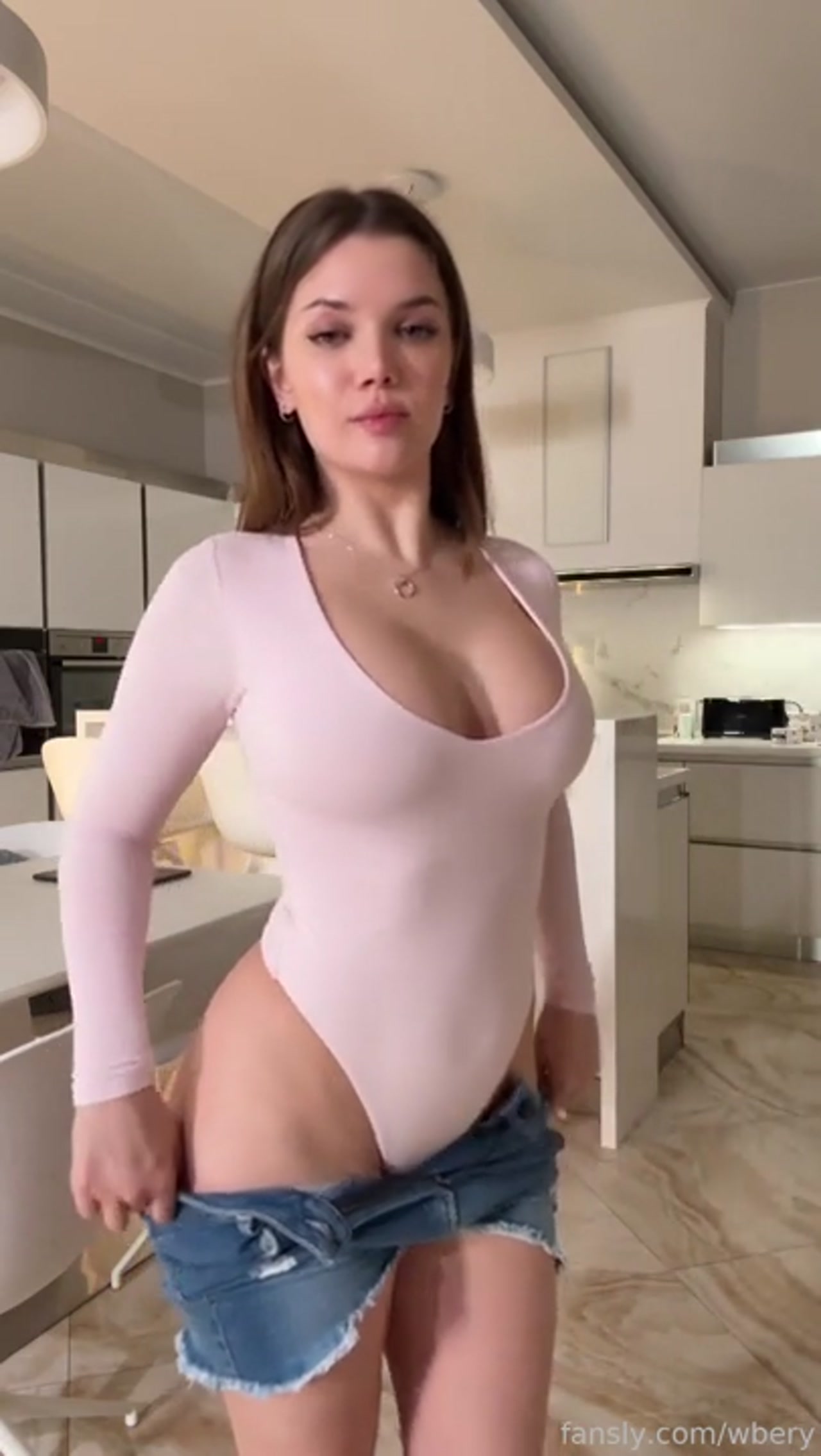
The woman is standing in a modern kitchen with white cabinets and stainless steel appliances sets the tone for this shorts tag hub. She's wearing a tight pink long-sleeve top that reveals her large breasts, and blue denim shorts with fray, captured in the raw still that anchors the cluster. That same shorts focus continues in She's standing on a balcony with her back to the camera, wearing a red bikini top and tight blue shorts that accentuate her round butt. She has long brown hair cascading down her back, slightly tousled, turning the balcony wooden railing into a classic Instagram dancer pose frame.

This tag page exists because the shorts motif cuts across both assets without dilution. The first video sits in category she's and carries tags she's, kitchen, white, slightly, modern, shorts. The second lands in category right with tags right, image, she's, balcony, wooden, back. Together they form a tight photo-pack style collection of an Instagram dancer type figure in tiny shorts—denim cutoffs in the kitchen, micro blue shorts on the balcony—exactly the visual language people hunt when they search instagram dancer in tiny shorts photo pack.
No creator stats or multi-name aliases appear in the grounding, so the page leans entirely on the linked titles and descriptions. The kitchen scene gives domestic, close-up fabric detail; the balcony scene supplies the rear-view silhouette and hair cascade that define the dancer aesthetic. Both runtime entries stay short (0 and 1 min), reinforcing the photo-pack feel rather than long-form video. Users landing here get the precise shorts emphasis repeated across the two real titles, the shared she's tag, and the dual categories she's and right, making the hub a clean aggregation point instead of a scattered search result.

The cluster earns its dedicated page by delivering consistent tiny-shorts framing in everyday and outdoor settings. Scroll the shorts tag and the pink-top denim look sits next to the red-bikini blue-shorts balcony shot, each description preserved verbatim so the page stays grounded in the actual assets rather than generic claims.